Timeless Websites. Built to be found
Technology changes. People don't
Websites for professionals and local service businesses who would rather be chosen than merely admired.

You know you are good at what you do
But does your website make the right person realise it?
That is the real problem.
Not whether the blue should be slightly darker.
Not whether the photograph should move when somebody scrolls.
Not whether the home page resembles the website of a competitor you admire.
The person who arrives on your site is usually trying to make a decision.
She may need a surgeon she can trust.
He may need a lawyer who understands what is at stake.
They may need a psychologist, an architect, an investigator, a watchmaker or a skilled tradesperson who can solve a very specific problem.
They are not looking for a website.
They are looking for the right person.
And they are quietly asking one question:
Can I trust this person enough to make the first call?
A useful website answers that question before the telephone rings.
Talk to me about my itch
Not about your ointment.
Most websites begin with the company.
We are innovative. We are passionate. We provide tailored solutions, We put the customer at the centre...
The words change slightly. The meaning does not.
And because the same sentences could appear on the website of almost any competitor, the visitor learns almost nothing.
We begin somewhere else.
With the visitor.
What happened before he found you?
What has he already tried?
What is he afraid of?
What would make him think, after only a few paragraphs, this person understands my problem?
Only after answering those questions do we talk about you.
That is not a fashionable marketing technique.
It is simply how people have always made important choices.
People don't choose websites. They choose people
In 1927, John Caples wrote one of the most successful advertisements in history.
It opened with a young man sitting down at a piano while the people around him laughed.
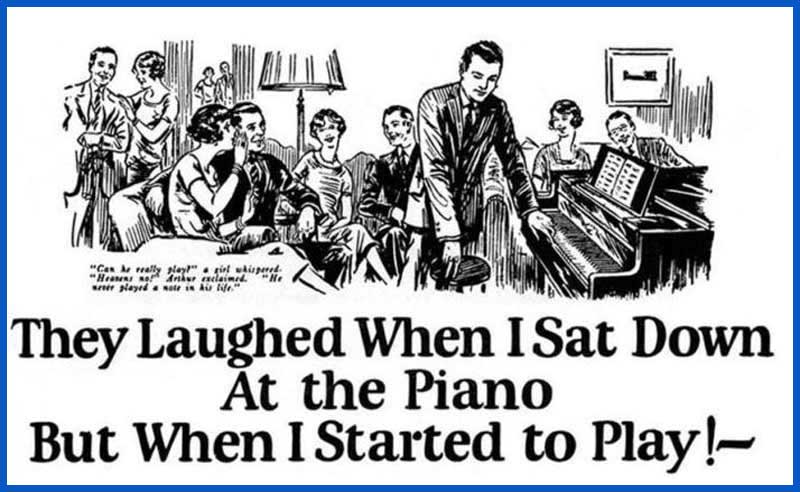
The advertisement appeared to sell piano lessons.
It did not.
It sold the moment in which the laughter stopped.
It sold recognition, confidence and self-respect.
The product was the lesson.
The reason to buy was human.
Almost a century later, the technology surrounding that message has changed beyond recognition.
The reason it works has not.
John Caples' timeless principles were written 70 years ago and remain relevant today.
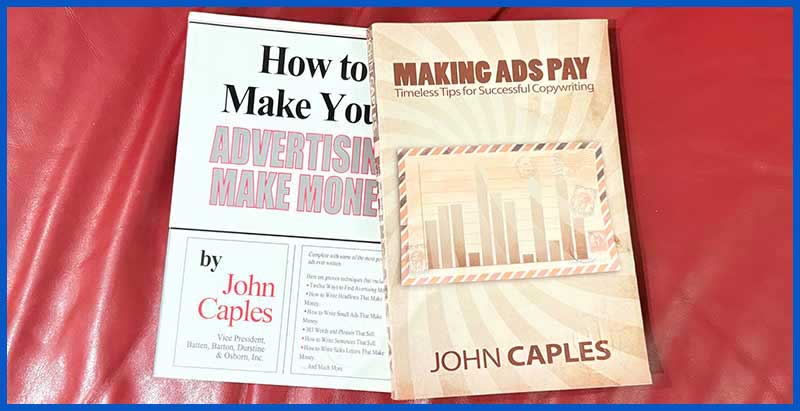
When I first read John Caples’s advertisement for the correspondence music school, I had a strange feeling.
It was as if he were telling a story I had already lived.
When I was young, I enrolled at the Scuola Radio Elettra to learn how to build and repair radios.
Many of my friends were convinced that a correspondence course could never truly teach someone a trade.
Then I built my first radio.
When I showed it to them, their scepticism turned into admiration.
That was when I understood why Caples’s advertisement had stayed with me.
Perhaps it is also why I believe so deeply in timeless principles.
Technology changes.
People change far less.
Almost a century later, the technology has changed beyond recognition.
But the reason the principle works has not.
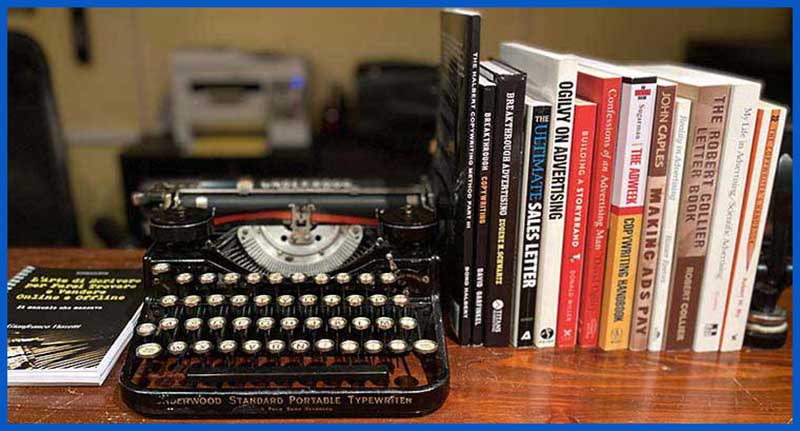
Why that headline is still alive - and still being copied - 100 years later
The mechanism is simple and powerful:
**Initial ridicule** > “They laughed at me.” / “Nobody believed in me.” / “They thought I was an idiot.”
**Sudden reversal** > “But when I began...” / “But then something happened...” / “But when they saw it...”
**Public vindication** > The protagonist goes from being humiliated to becoming the winner.
It is one of the oldest narrative structures in the world: the underestimated hero who surprises everyone.
Marketers use it everywhere:
“Nobody believed this treatment would work, but when they tried it...”
“They laughed when I said I was going to start a business, but now...”
“They thought it was impossible to lose weight this way, until...”
“They told me it was a scam, but when they saw the results...”
The emotional dynamic is always the same:
Create a **before**, filled with scepticism, and an **after**, marked by triumph.
A book changed the direction of my work
Forty years ago, around the time I left Xerox to begin working on my own, I discovered Og Mandino.
I expected books about sales techniques.
Instead, I found books about people.
One lesson remained with me: people recognise when you genuinely care about helping them.
The Christmas gift for Laura
Years later, at Christmas, I gave a client named Laura a copy of The Greatest Miracle in the World.
Her office was full of expensive baskets, bottles of wine and other gifts from suppliers.
Mine was only a book.
When I saw her a month later, she paused for a moment.
"Can I ask you something?" she said.
"Had you actually read the book you gave me?"
"Of course," I replied.
She smiled.
"It was the most beautiful gift I received that Christmas," she said. "It moved me."
From then on, she entrusted me with many more hours of work each month.
She had not rewarded me for the price of the book.
She had responded to the fact that I had chosen it for her.
Robert Cialdini would probably call it reciprocity.
I prefer to call it attention.
And attention is where a good website begins.
The first design decision is not visual
The first decision is what the visitor should understand.
The second is what he should feel confident enough to do next.
Everything else should help those two things happen.
If an image helps, we use it.
If a technical feature helps, we use it.
If an effect merely asks the visitor to admire the effect, we remove it.
This is why our websites often look simpler than other websites.
They are not empty.
They are concentrated.
Timeless does not mean old
It means built on principles that remain useful after fashions disappear.
Flash intros were once considered modern.
Then they disappeared.
Animated home pages, complicated sliders and heavy page builders have each had their moment.
Something else will replace them.
Trust will not be replaced.
Clarity will not be replaced.
Credibility will not be replaced.
The desire to feel understood will not be replaced.
That is why we call them Timeless Websites.
Trend-proof design is the technical consequence.
Human nature is the foundation.
Built for people. Understood by search engines and AI
Writing for people first does not mean ignoring technology.
It means putting technology in its proper place.
Once the message is clear, we organise it with clean semantic structure, careful on-page SEO, excellent performance and the signals that help search engines and AI systems understand who you are, what you do and where you do it.
SEO helps the right person find the page.
Copywriting helps that person keep reading.
Evidence helps her believe what she has read.
Speed prevents the technology from getting in the way.
None of these elements can do the whole job alone.
Together, they can make a quiet page remarkably persuasive.
Sometimes the best website is the one we refuse to build
Hundreds of times, I have discouraged someone from investing in a website.
That may sound like a strange thing to admit on the website of someone who builds them.
But a website is not automatically a good investment.
There must be a real market.
There must be a credible reason for the customer to choose you.
And there must be a reasonable chance that the project can repay its cost.
If those conditions are not present, we prefer to say so.
Stefano Agostinelli put it better than I could:
Three times, Gianfranco Viasetti advised me not to build a website. I thank him for an honesty that is truly hard to find.
We lost the project.
We gained something more valuable: proof that our advice does not change according to what we hope to sell.
Nearly three decades. More than 600 websites
Since 1997, Studio Viasetti has worked almost exclusively with professionals, skilled tradespeople and local service businesses.
Different professions.
Different cities.
One common need.
To be found by people who are already looking for what they do - and to be chosen when those people arrive.
Many of the websites we created ten or fifteen years ago are still online, still fast and still bringing enquiries.
That matters to us more than winning a design award for a website that will be rebuilt two years later.
This site is the manual
This site explains the principles.
Viasetti.it shows what those principles look like in the real world.
Here, on viasetti.com, we explain the thinking behind the work.
On viasetti.it, you can see those principles applied to a real commercial website: the words, the restraint, the search structure, the proof and the performance.
One is the theory.
The other is the working demonstration.
And the oldest part of both is still the most powerful.
It is not the code.
It is not the design.
It is something humans were using thousands of years before the first screen existed.
Next Page: Discover the ancient secret
The Word The Method Proof About
Contacts: Gianfranco Viasetti - Email: [email protected]